
The digital landscape has undergone a seismic shift. In 2026, we have officially moved beyond the era of static containers and rigid grids. Today, web design isn’t just about pixels on a screen; it’s about creating living environments that respond to the user’s intent, environment, and biology.
At TheBomb®, we’ve been tracking these emerging patterns. Here is what is defining the cutting edge this year.
1. Spatial Computing & Depth as a Language
With the mainstream adoption of spatial browsers (like those found in Apple Vision Pro and Meta’s latest headsets), depth is no longer a visual “trick”—it is a core design language.
- Z-Axis Hierarchy: Instead of stacking elements vertically, we are designing in 3D space. Content now floats in layers, using real-time occlusion and shadows to indicate importance.
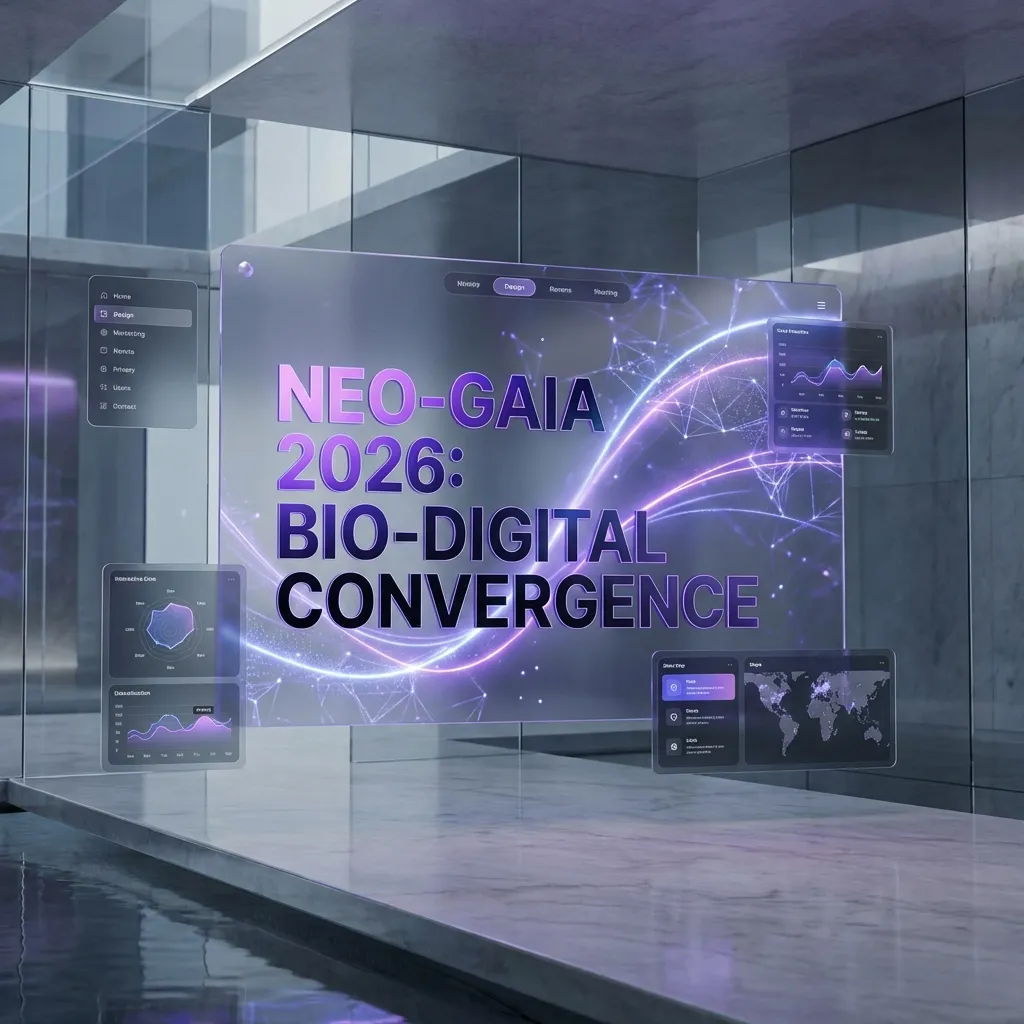
- Glassmorphism 2.0: The “frosted glass” look has evolved. In 2026, it involves dynamic refraction that distorts the content behind it based on the user’s viewing angle, creating a sense of physical presencia.
- Eye-Tracking Navigation: Hover states are being replaced by “gaze states.” Elements subtly glow or expand when a user looks at them, reducing the cognitive load required to navigate.
2. Generative UI: The End of the “One-Size-Fits-All” Layout
Static templates are a relic of the past. In 2026, the most advanced websites use Generative UI—layouts that are composed on-the-fly by AI models based on user data.
- Context-Aware Structuring: If a user is browsing for technical documentation at 2 PM, the site displays a high-density, text-focused grid. If the same user returns at 10 PM on a mobile device, the site shifts to a high-contrast, voice-friendly, simplified interface.
- Adaptive Color Theory: CSS variables are now frequently tied to local weather APIs and circadian rhythms. A site might feel warm and energetic in the morning and transition to a soothing, “Deep Sea” dark mode as the sun sets.
- Intent-Based Components: Elements literally appear where your cursor (or gaze) is headed. The interface “predicts” your next move, surfacing the checkout button or search bar exactly when you need it.
3. Kinetic Typography & Liquid Motion
Text is no longer just for reading; it’s a performance. Kinetic typography has become the gold standard for high-end digital brands.
- Variable Font Animations: Fonts now respond to scroll depth, stretching and thinning as the user moves through the page.
- Liquid Distortions: Transitions between pages feel like water moving through a vessel. Elements don’t just “fade in”—they coalesce from particles or flow into place with organic curves.
- Non-Linear Scrolling: We’ve moved beyond the vertical column. Designs now utilize multi-directional scrolling, where the background moves on a different plane than the foreground, creating a parallax effect so deep it feels like looking through a window.
4. The Tactile Web: Haptic Branding
As mobile devices and haptic-enabled trackpads become the primary touchpoints, we are seeing the rise of Haptic Branding.
Designers are now specifying “haptic signatures” alongside color palettes. A “success” state might feel like a double-click on a mechanical watch, while a “warning” might feel like a subtle, grainy vibration. This tactile feedback creates a physical connection between the brand and the user that was previously impossible.
5. Neo-Minimalism vs. Digital Maximalism
We are seeing a split in design philosophy:
- Neo-Minimalism: For productivity tools and SaaS, the trend is “Zero UI.” Interfaces are becoming invisible, relying on voice, gestures, and AI agents to handle the complexity.
- Digital Maximalism: For e-commerce and portfolio sites, the trend is “The Experience.” These sites are immersive, loud, and full of WebGL 3D experiments. They aim to “WOW” the user within the first 0.5 seconds—a reaction we specialize in at TheBomb®.
Conclusion: The spectacular is now standard
The 2026 web is a place where technology and art have finally merged. We are no longer limited by the constraints of the browser; we are only limited by our imagination. The websites that win this year are those that treat the user not as a visitor, but as a participant in a digital narrative.
The static website is dead. The future is an interface that evolves with the user.
Ready to build what’s next?
The future isn’t something that happens to you; it’s something you build. Let’s make it spectacular.