
The landscape of web development has changed drastically in 2026. With the rise of advanced AI coding assistants and “vibe coding” platforms, the barrier to entry for claiming to be a “web agency” has never been lower. While these tools are powerful, they have also birthed a new wave of low-quality, insecure, and often fraudulent service providers.
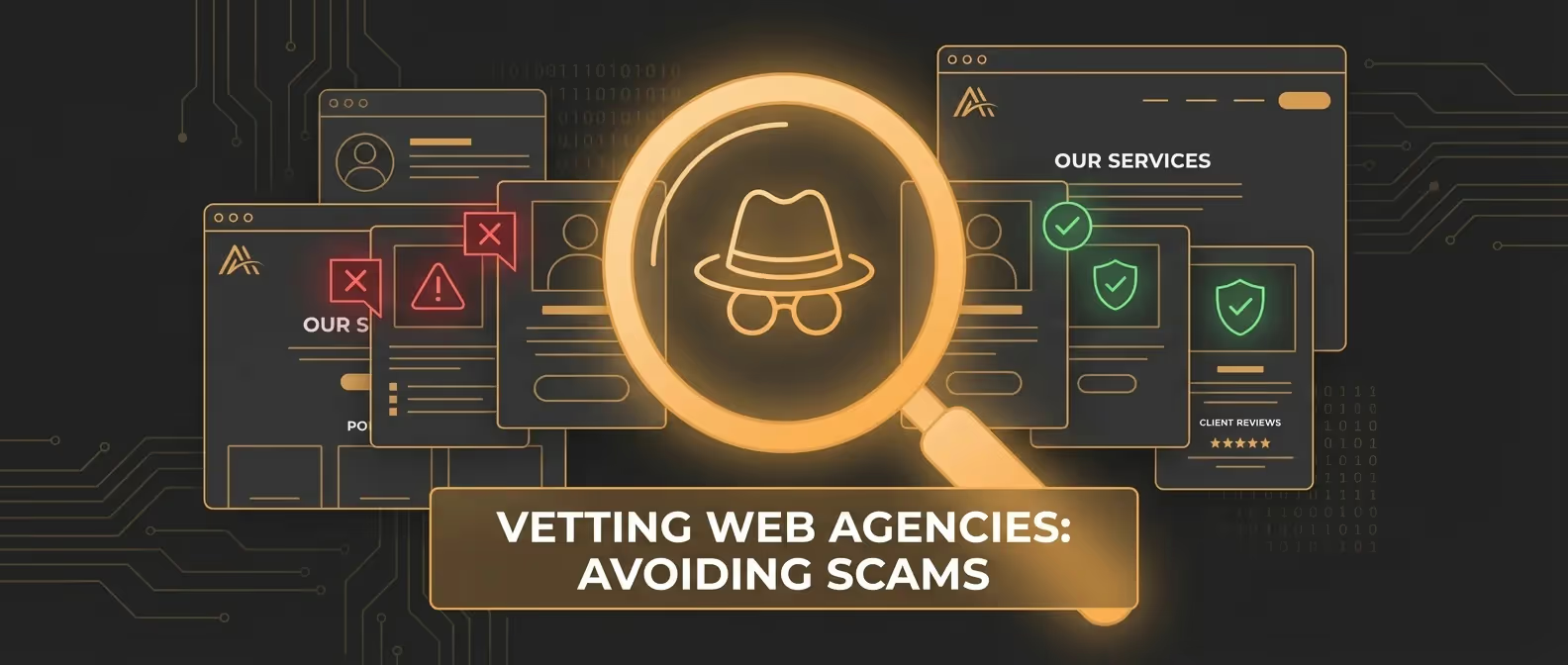
If you are a business owner looking for a digital partner, you need a more rigorous vetting process than ever before. Here is the definitive guide to finding a real web developer in the age of AI.
1. The Mirror Test: Look at Their Own Website
It sounds obvious, but it is the most frequent red flag we see. Many “modern” web agencies use templated, generic, or even broken websites for their own brand.
What to look for:
- Performance: Does their site load instantly? Run it through Google PageSpeed Insights. If an agency selling “performance” has a slow site, they cannot help you.
- Attention to Detail: Are there broken links, placeholder text, or “Lorem Ipsum” hidden in the footer?
- Originality: Does it look like a $20 template, or is it a custom, high-end experience? If they didn’t invest in their own digital storefront, they won’t invest in yours.
2. Forensic Portfolio Verification
The easiest thing to fake in 2026 is a portfolio. We’ve seen “AI-generated” agencies claiming they built sites for Fortune 500 companies when they actually just screenshotted existing websites.
The Golden Rule: Check the Footer. High-end agencies almost always include a “Site by [Agency Name]” or “Powered by [Agency Name]” link in the footer of their client’s websites.
- Don’t just look at screenshots: Go to the actual URLs listed in their portfolio.
- Scroll to the bottom: If the agency isn’t credited in the footer, ask them why.
- Verify the link: If there is a credit, does it link back to their agency website?
3. Verify Business Legitimacy (The Google Test)
In the digital world, it’s easy to look like a global corporation when you’re actually just a single person using an AI wrapper in their basement. While there’s nothing wrong with being a talented freelancer, you want to ensure the “agency” you are hiring is an actual registered business.
- Google Reviews: Check their Google Business Profile. Are the reviews from real people with history, or do they look like bot-generated praise?
- LinkedIn Presence: Look up the team members on LinkedIn. Do they have a professional history in development, or did they “become” a web developer three months ago?
- Case Studies: Ask for a deep dive into a past project. A real developer can talk for hours about the architectural decisions they made. A “vibe coder” will talk about the prompt they used.
4. The Danger of “Vibe Coding” & Pure AI Agencies
2026 has seen the rise of Vibe Coding—using AI to generate entire codebases without a deep understanding of what the code actually does. While AI is a tool we use at TheBomb® to accelerate our workflow, it is never a replacement for engineering.
The Risks of Pure AI Development:
- Security Vulnerabilities: AI-generated code often misses critical security patches or implements outdated patterns that are easy to exploit.
- Performance Bloat: AI tends to write “junk code” that is inefficient and slow, leading to poor SEO and a bad user experience.
- Maintenance Nightmares: When your site breaks (and every site eventually needs updates), a “vibe coder” won’t know how to fix it because they didn’t write it. They’ll just try another prompt and hope for the best.
Ask them: “What is your tech stack, and why did you choose it over others?” If the answer is vague, walk away.
5. Security & Ownership: The Hidden Essentials
A good agency won’t just hand you a working website; they will hand you a secure, owned asset.
- SSL & Security: Is the site inherently secure? Ask about their approach to data protection and DDoS mitigation.
- Deployment: Do you own the source code and the hosting account? Never let an agency “host it for you” on their private server without you having administrative access.
- Long-term Support: What happens if the site goes down at 2 AM on a Sunday? Real agencies have a support structure.
6. The “Gotcha” Questions: Top 5 to Ask Now
Before you sign any contract, ask these five questions to separate the engineers from the enthusiasts:
- “Can you explain how my site will be deployed and who owns the infrastructure?” (If they say you don’t need to worry about it, you should worry about it.)
- “How do you handle Core Web Vitals and performance optimization?” (Demand specific numbers, nicht just “we make it fast.”)
- “Do you use a custom tech stack or an AI-first approach for logic?” (A red flag is any agency that relies solely on AI for complex backend logic.)
- “What is your process for security audits and penetration testing?” (Security should never be an afterthought.)
- “Can I speak with a developer on the project, not just a salesperson?” (Ensure there is actual technical talent behind the sales pitch.)
Conclusion: You Get What You Pay For
In 2026, the cost of a “bad” website is more than just the development fee—it’s the lost revenue from performance drops, the legal risk of security breaches, and the cost of having to rebuild everything six months later.
Find a partner who understands the engineering of the web, not just the vibe of it.
Looking for a partner that prioritizes real performance and security? Get in touch with the Strategy Team at TheBomb®.